

The first 90 days of an outsourced CMO in a company
An outsourced CMO goes through four phases in the first 90 days at a company. In the first two weeks, they build a map of costs and revenue from the data. By week six, they diagnose the situation and talk to people. By week ten, they decide on priorities and the budget. In...

Matthew effect
The Matthew effect describes how advantage breeds further advantage. Whoever already has a lead in attention, money, links or reviews gains more of them disproportionately easily, and the gap between them and everyone else widens. It is named after a verse from the Gospel of...

Fractional CMO, agency or full-time marketer?
A fractional CMO pays off for a company that needs senior marketing leadership but has neither the work nor the money for a full-time director. An agency delivers results in the channels it sells, but it is not usually accountable for marketing as a whole. A full-time...

Marketing audit and what to check before raising your budget
A marketing audit is an independent review of a company’s entire marketing before a major decision. It answers two questions. Does what you pay for today make money? And where should the next crown go? It is typically done before the owner puts more money into...

Attribution models and how to tell which channel really sells
An attribution model is the rule your analytics uses to split the credit for an order between the channels the customer came through on the way to buying. One model gives everything to the last click, another to the first, and others split the order equally or based on data....
Pareto principle (80/20 rule)
The Pareto principle, also known as the 80/20 rule, says that a minority of causes produces most of the results. Typically, roughly 80% of the effect comes from 20% of the inputs. A fifth of customers bring in most of the revenue, and a fifth of a website’s pages bring...

ROAS or PNO? Which number to steer by so your ads make money
ROAS (return on ad spend) is the ratio of revenue from advertising to its cost. A campaign that brings in orders worth 50,000 CZK for 10,000 CZK (both excluding VAT) has a ROAS of 5, shown in Google Ads as 500%. PNO (podíl nákladů na obratu, ad cost as a share of revenue) is...

Goodhart’s law and the cobra effect
Goodhart’s law says that when a measure becomes a target, it ceases to be a good measure. Once people know they are judged by a number, they start improving the number instead of the thing it was meant to measure. The cobra effect is its close relative. A reward or rule...

Golem effect
The Golem effect (golem efekt in Czech) is a psychological phenomenon in which low expectations lead to poorer performance. A boss or teacher decides in advance that someone is not up to a task and starts treating them accordingly. They give the person less room and less...

Erika Fashion case study with 436,000 visits from Google in a year
I started working for Erika Fashion, a women’s fashion client (erikafashion.cz and erikafashion.sk), as an outsourced SEO consultant and link builder in April 2024, and I was given a lot of freedom and trust. Because we can move and change things quickly, the results...
Nudge and choice architecture
A nudge (literally a poke or a push with the elbow) is a small change to the environment in which we make decisions that predictably steers people towards a particular choice. It must not forbid anything or significantly change incentives, and other choices must remain easily...
Hawthorne effect
The Hawthorne effect (Czech: hawthornský efekt) describes how people change their behaviour when they know someone is watching or measuring them. They work more carefully and follow rules they would otherwise get around. It is named after the Hawthorne Works factory near...

How to build a marketing strategy, with a step-by-step process and an example
A marketing strategy is a decision about who you will sell to, what you will sell and how, so that the company meets its business goal. The plan, campaigns and posts are simply what follows from it. In my experience, a good strategy fits on a single page. If you can’t...
Stanford prison experiment and the Lucifer effect
The Stanford Prison Experiment (Stanfordský vězeňský experiment) is a famous and now heavily disputed study by psychologist Philip Zimbardo from 1971. He split students into guards and prisoners and locked them in a prison in the basement of Stanford University. The...

Who a CMO is and what they really do in a company
A CMO (Chief Marketing Officer) is the person in a company’s leadership who is responsible for what marketing delivers in revenue and customers. Not for how many campaigns it launches. They decide where the money goes, who does what and which numbers show that it is...

USP, or unique selling proposition, and how to find yours
A USP (Unique Selling Proposition) is a unique selling argument. It is one specific thing that only you offer, or that only you can clearly state and prove, and that makes a customer choose you rather than the competition. Both count as a USP, but the second one lasts for a...
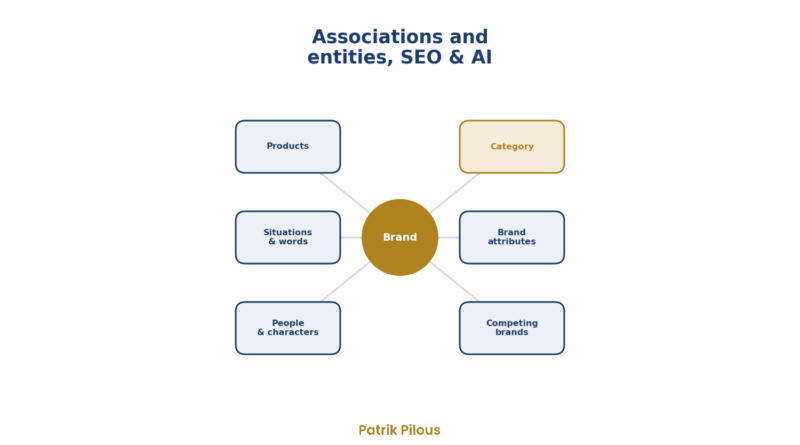
Why SEO and AI visibility depend on associations and entities
A brand has two layers in the customer’s mind. The entity, meaning a clear idea of who the brand is, and around it a network of associations that people connect with it. Search engines and language models such as ChatGPT or Gemini build their picture of a brand in a...
Asch experiment and conformity
The Asch experiment (Asch conformity experiment) showed how strong conformity is, meaning the tendency to adjust your own judgement to a group. The psychologist Solomon Asch seated students among actors who deliberately claimed that a different line was the same length than...
Milgram experiment
The Milgram experiment is a psychological study of obedience to authority, which the American psychologist Stanley Milgram began in 1961 at Yale University. On the experimenter’s instructions, participants were to give another person shocks from 15 to 450 volts. In...
Placebo effect
The placebo effect is an improvement brought about by the expectations and context of treatment, even when the active substance is missing. The placebo itself is something inactive, typically a sugar pill or a sham procedure, and the patient perceives it as treatment. When...
Impostor syndrome
Impostor syndrome (often also spelled imposter syndrome) is the belief of a capable person that they have not earned their successes and that the people around them will soon see through them. They put success down to luck or hard work, almost never to their own ability. The...
Groupthink
Groupthink is a way of making decisions in which a cohesive group puts agreement ahead of a critical assessment of the options. People in the team swallow their doubts because they do not want to spoil the atmosphere or hold things up. Everyone then reads the silence of the...

What makes my eyes pop out of my head when it comes to pricing development in the age of Claude Code
For years I have been reviewing and writing briefs for developers at my clients. I am not a developer, I am an SEO and marketing consultant. But I am the one who defines what needs to be done, who then signs it off and who defends it in front of the client. So I sit exactly...
Broken windows theory
The Broken Windows Theory holds that visible signs of neglect, such as a broken window or a wall covered in graffiti, signal to people that nobody enforces the rules here. More disorder follows, and gradually more serious rule-breaking too. It was named in 1982 by the...
Hanlon’s razor
Hanlon’s Razor is a rule that advises against attributing to malice what can be adequately explained by error, ignorance, carelessness or overload. The original English wording speaks of stupidity, but in this entry I speak of ordinary human failure, because I think it...
Dunbar’s number
Dunbar’s Number is an estimate of how many stable relationships one person can maintain. The figure most often quoted is 150, but it is an estimate with a wide spread. It counts people you know personally, where you know them from, and whom you talk to from time to...
Peter principle
The Peter Principle is Laurence J. Peter’s satirical claim that in a hierarchy every employee rises until they reach their level of incompetence. Companies promote people for their performance in their current job, yet that says little about their abilities for a more...
Parkinson’s law
Parkinson’s Law states that work expands so as to fill the time available for its completion. A task that should take an afternoon takes a week if you are given a week. The British historian C. Northcote Parkinson wrote it in 1955 as a satire on bureaucracy....
Weber’s law
Weber’s Law states that the smallest difference a person can still notice grows with the size of the original stimulus. This smallest noticeable difference is called the difference threshold (just noticeable difference, or JND for short). The law comes from sensory...
