

A featured snippet is a highlighted answer box that Google pulls directly from the content of a page and shows above the regular results. It is also called position zero, because it sits even higher than the first organic link. The aim is to give people an answer as quickly as possible, ideally without them having to click anywhere. For your website, it is both a huge opportunity and a trap. Getting into a featured snippet means being right at the top of the search results page and gaining visibility the first link can only dream of. At the same time, there is a risk that people get their answer and go no further.
With the arrival of AI Overviews (AIO), the featured snippet is moving somewhat further into the background. Both formats compete for the most lucrative territory (position zero, or Position Zero), with the aim of satisfying the information need without the user having to dig deeper into the results.
Displacement and deduplication: When a large AIO block appears, the traditional Featured Snippet is very often either removed from the SERP entirely or pushed further down. The algorithms primarily try to avoid duplicating information.
Where the term comes from
The English word featured means highlighted, showcased or brought to the fore. A snippet is a fragment or piece, in other words a short excerpt of text. Together, they mean an extracted fragment, which is exactly what Google does. It takes part of an answer from your page and puts it on display at the top. No established Czech translation has caught on, so people simply talk about a featured snippet or an extracted answer. It is one of the elements that turned the SERP into much more than a list of ten blue links, as I describe in the basics of what SEO is.
A short history of the featured snippet
Google introduced featured snippets in 2014 in response to people wanting answers quickly and increasingly searching in the form of questions. Instead of sending users to a website, it started showing the selected answer directly.
Alongside them came the People Also Ask box, showing related questions that people ask. This development keeps heading in the same direction, towards an answer without a click, and it culminates in today’s AI overviews, which I write about in my article on how SEO and GEO work.
How a featured snippet works from an SEO perspective
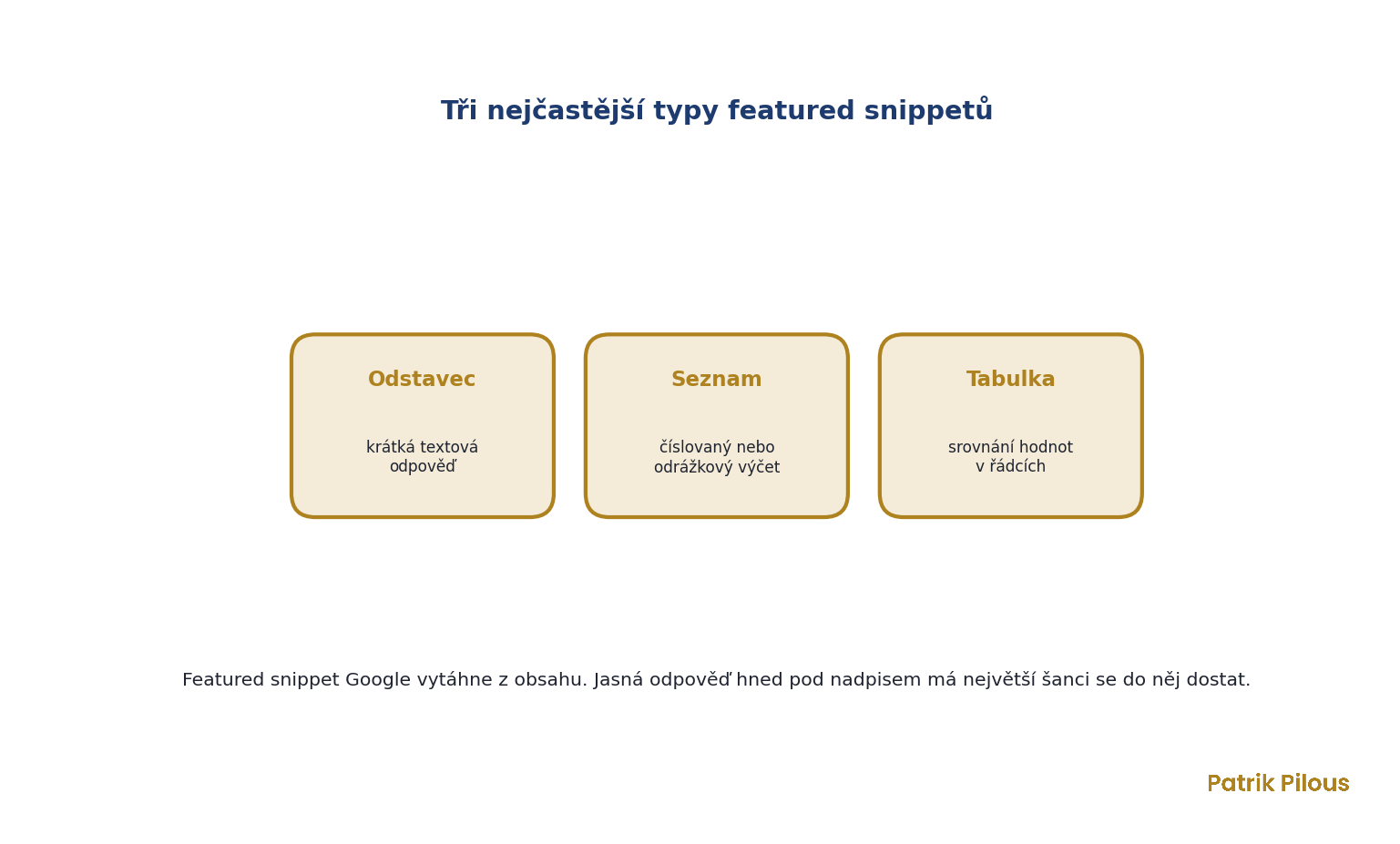
You cannot get into a featured snippet by asking for it. Google pulls it from a page that answers a specific question well and clearly. Informational queries have the best chance, so everything starts with understanding search intent. Featured snippets usually take three forms: a paragraph with a short answer, a numbered or bulleted list, and a table.
In practice, this means writing so that right below a heading phrased as a question, you give a brief, clear answer, ideally two to three sentences, and only then expand on it. This structure helps the crawler find the answer, and it is part of good SEO copywriting. You also need to target the right keyword, ideally phrased as a question.
Why featured snippets matter
A featured snippet gives you space and authority that are otherwise hard to earn. Being above the first result means being the first thing people see, and often the only thing they read. That is invaluable for building awareness and trust.
But there is another side to it. When a snippet answers the question completely, people have no reason to click, and you lose the visit. That is why, during an SEO audit, I always consider which queries are worth fighting for a snippet and which are better left so that people come to the website for the answer. An enticing description also plays a role here, as it can encourage clicks.
Where it leads
The featured snippet is a sign of a world where the search engine does not link but answers directly. It is the same logic behind AI-generated answers, which is what GEO focuses on. Psychology plays a part too. Thanks to processing fluency, the first answer we are offered feels like the right one, because it is at hand and we do not have to keep searching. Whoever takes position zero benefits from exactly this human convenience. And in a world where AI answers, the fight for the snippet becomes a fight to be the source the model draws from.
The most common mistakes
- Chasing a featured snippet for queries that have purchase intent and no extracted answer.
- A long-winded answer hidden at the end of the text, which the crawler will not pull out.
- Ignoring the format. For “how to” questions, Google often wants a numbered list, not a paragraph.
- Being overly pleased with a snippet even where it reduces clicks and an enticing title and description would work better.
Questions about featured snippets
What is a featured snippet?
A highlighted answer box that Google pulls from the content of a page and shows above the regular results. It is also called position zero.
How do you get into a featured snippet?
Answer a specific question clearly and briefly right below the heading, in the right format (paragraph, list, table), and target queries phrased as questions.
Is a featured snippet good or bad?
Both. It gives you maximum visibility on the SERP, but if it answers the question completely, it can cost you clicks. It depends on the type of query.

