
A keyword is a word or phrase that people type into a search engine when they are looking for something. It can also be a word that a company wants to rank as high as possible for in search results. It does not have to be a single word; it can be a whole sentence or a question. Keywords are the language your audience and the search engine use to talk to each other, and all of SEO is built on them (even though the role of keywords has changed quite significantly in recent years). When you know which words people search for, in what volumes and in what form, you can create exactly the content they expect. Conversely, even a great article on a topic nobody searches for will, logically, get no visitors.
How it started
The term “keyword” is quite telling. The word “key” suggests a term that unlocks the way to relevant content, just as a key unlocks a door. The English term has its roots in librarianship and in information retrieval, where keywords served as reference points that made it possible to find things in huge archives. The web simply adopted and extended this principle.
A brief history
In the early days of SEO, keywords were taken far too literally. Search engines looked for exact matches, so websites started cramming keywords in wherever they could, even at the cost of unreadable text. Misspelt keywords were added too, because they had some search volume. This bad practice was called keyword stuffing. The turning point came in 2013 with Google’s Hummingbird update, which shifted search from individual words to the meaning and context of the whole query. Since then, the goal is no longer to repeat exact phrases but to cover the topic and the intent behind the word. Modern keyword work is therefore mainly about search intent. When you type any phrase or word into a search engine, the first three results show you what answer people expect for that query.
How keywords work in SEO
A keyword connects three things: what a person is searching for, what they have in mind and what you offer them. Good keyword work starts with keyword research, in which you find out the search volume of each keyword, how strong the competition is and, above all, what intent lies behind it. You also pull in data (I have used Marketing Miner for many years) on search volumes and rankings for your website and your competitors.
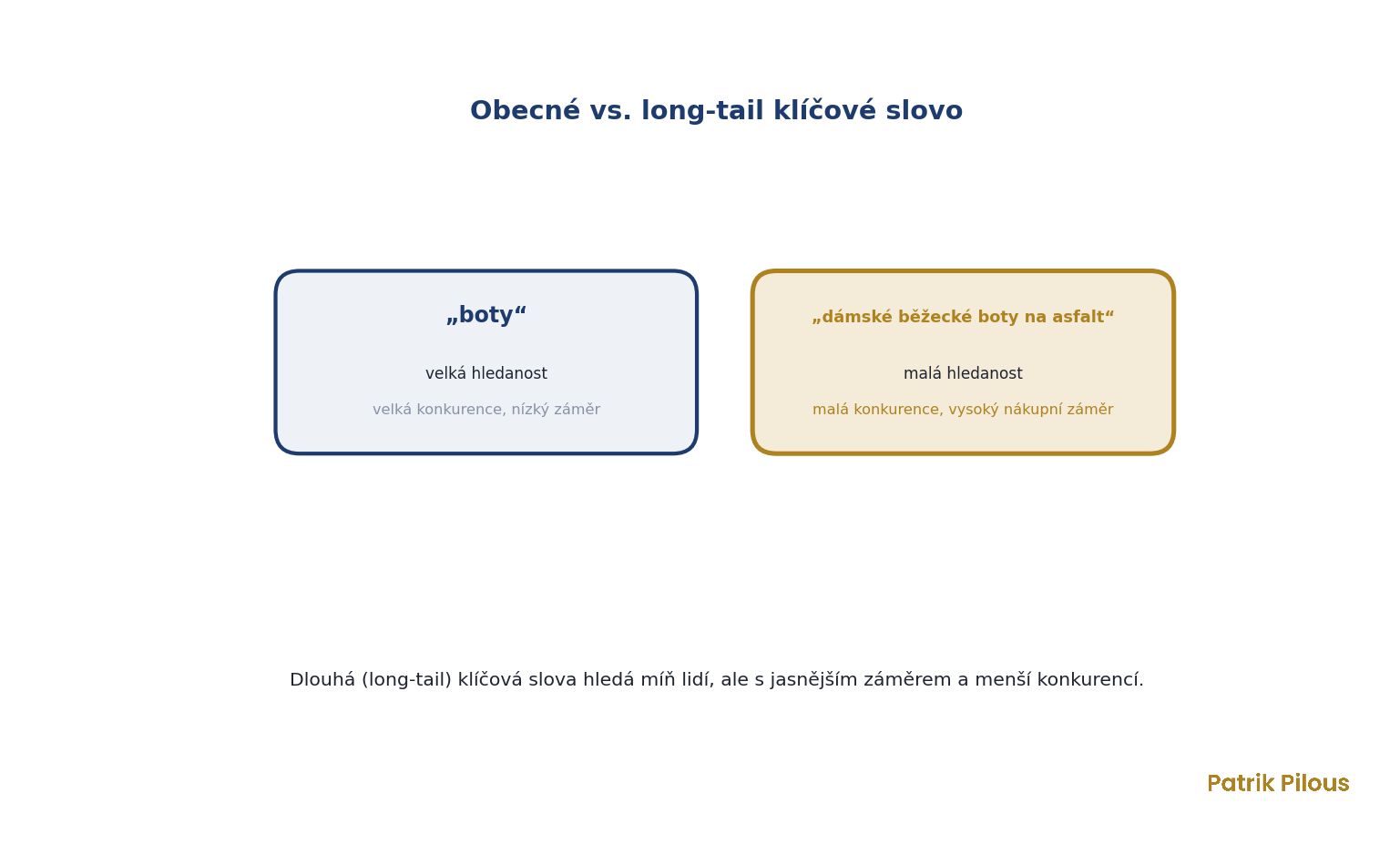
The key distinction is between generic keywords and so-called long-tail keywords. A short keyword like “shoes” is searched for by lots of people, but the competition is huge and the intent unclear. A long phrase like “women’s running shoes for asphalt” has lower search volume, but a much clearer purchase intent and easier competition. I cover this in detail in keyword research.
In recent years, keyword research has changed a great deal and can now be done in a few hours, whereas it used to take 20+ hours.
Why keywords matter
Keywords are the compass for all your content. They determine what to write about, which words to use and who to write for. Without them, you create content blindly and hope someone will want it. With them, you know where real demand lies and can serve it in a targeted way. Keywords also connect SEO with business, because the right ones bring in not just visitors but, above all, people who are interested in buying. That is why it is important to place the keyword naturally in the title, the headings and the content itself, and above all to serve the intent behind it well. Combining the keyword with readable text is the core of SEO copywriting.
Where it goes further
A keyword is really a bridge between how people think and how machines work. What is interesting is how this bridge changes over time. People used to learn to speak like machines, typing terse commands such as “weather Prague” into the search engine. Today it is the other way round: machines are learning to understand people, so you can simply type a whole question in everyday language. With voice search and AI, keywords are turning into key questions and topics. The essence, however, remains the same. It is still about matching the language your audience thinks in, a skill that is useful far beyond SEO. I explore where this shift leads next under GEO.
Most common mistakes
- Targeting generic keywords with huge competition instead of achievable long-tail phrases.
- A one-page website that targets no keywords at all
- Services not broken down into individual phrases
- No faceted filtering on e-shops and no targeting of long-tail keywords
- Choosing keywords by search volume without regard to the intent behind them.
- Excessive repetition of a keyword in the text at the expense of readability, the old keyword stuffing.
- Creating content on a topic nobody searches for, just because we like it.
Questions about keywords
What is a keyword?
A word or phrase that people type into a search engine. It is the language your audience uses to describe what they are looking for.
What is a long-tail keyword?
A longer, more specific phrase with lower search volume but clearer intent and less competition, for example “women’s running shoes for asphalt”.
How many times should I use a keyword in the text?
There is no magic number. Use it naturally in the title, headings and text so that it reads well. Excessive repetition does harm today.

