
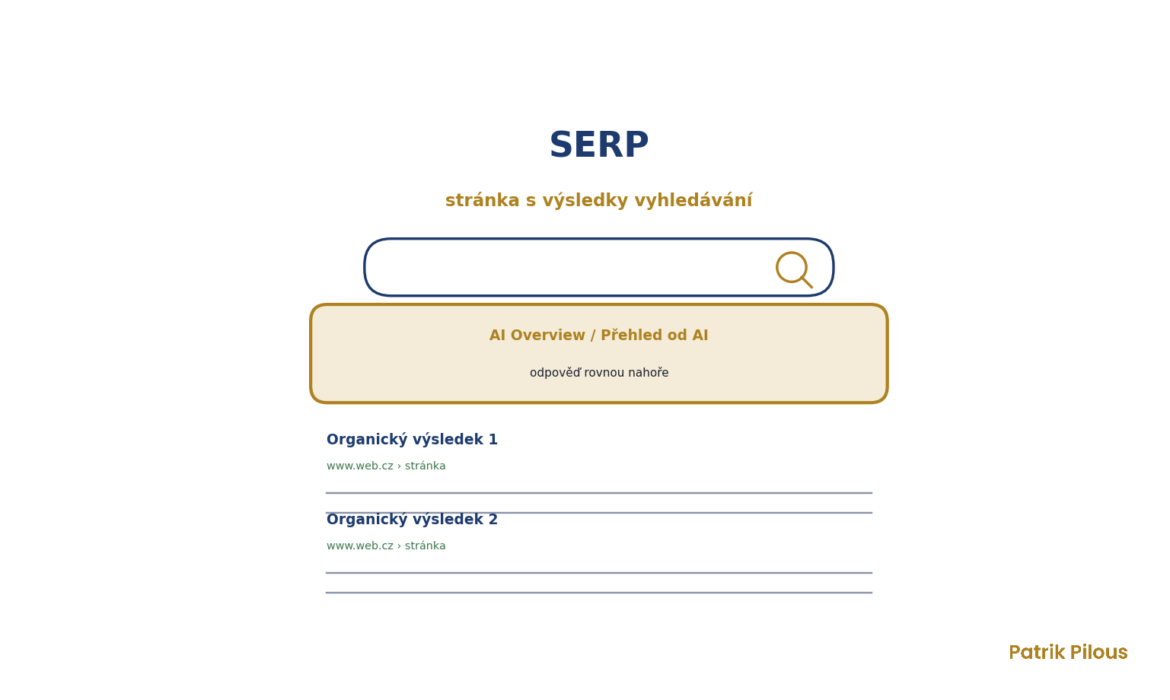
SERP stands for Search Engine Results Page. It is the page Google or another search engine shows you after you enter a query. It used to be a plain list of ten blue links. Today it is a crowded space where paid ads, AI overviews, images, maps and other elements compete for attention. For SEO, the SERP is the playing field. Understanding what it looks like for your query is the first step towards ranking higher and earning the click.
Where the word comes from
SERP is simply an abbreviation of the English phrase Search Engine Results Page. In Czech it is usually not translated; people just use the abbreviation SERP, which anyone working in SEO knows. Literally, it is the page of results from a search engine, meaning the output the search engine puts together for your specific query.
A short history of the SERP
In the early days of search engines, the SERP was simple: ten organic links one below the other, perhaps with a few ads on the side. This layout is still known as the ten blue links. This was also when classic SEO had the greatest impact.
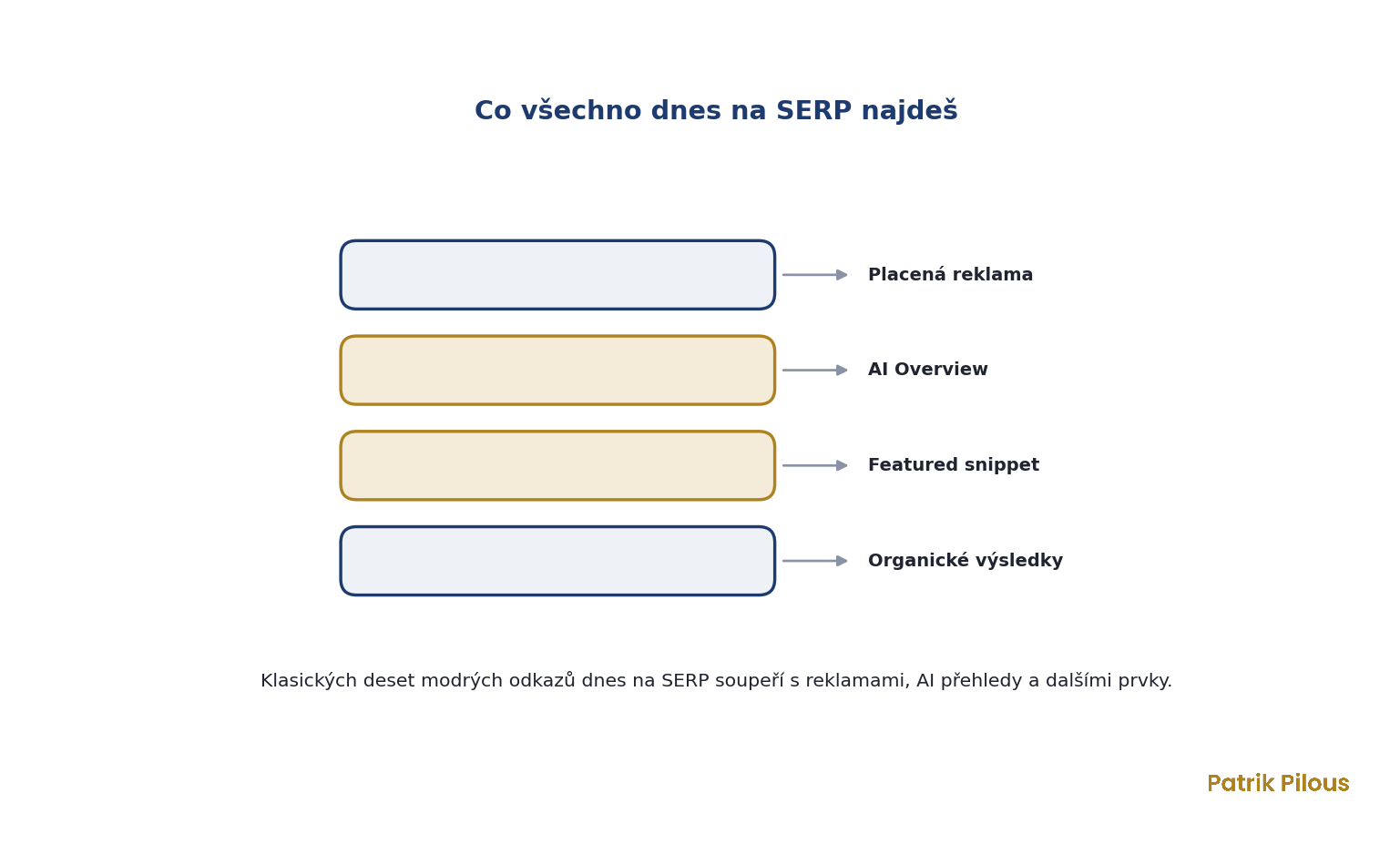
Over time, however, Google began adding more elements to give users an answer as quickly as possible and, above all, to make money. The knowledge panel arrived, then the People Also Ask box, image and video results and, in 2014, the featured snippet, an extracted answer shown above the results. The most important change, though, is the paid results above the organic ones, which Google kept adding until it reached the current number (max 4).
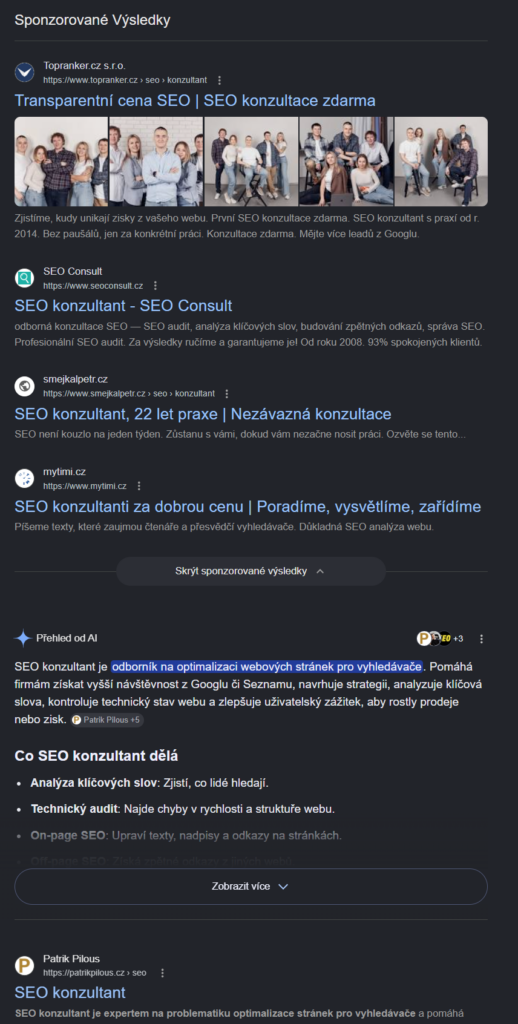
The preview shows that the first organic result for the keyword “SEO konzultant” (SEO consultant), which is my website, is barely visible above the fold. Just a few years ago it had far more visibility and traffic.
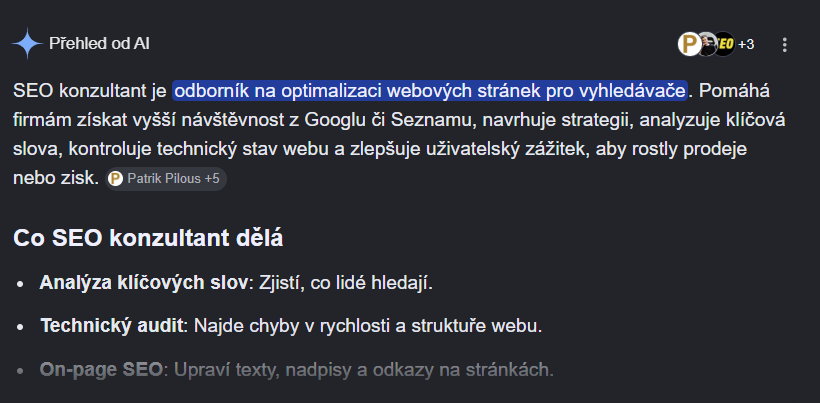
The biggest shift so far came in 2024 with the arrival of AI Overviews, summaries generated by artificial intelligence directly above the links. This turns the SERP from a signpost into a place where users often get their answer without clicking anywhere.
How the SERP works from an SEO perspective
The SERP looks different from one query to the next, and that is exactly what matters for SEO. For an informational query you will more likely see a featured snippet and an AI Overview, for a commercial one shopping ads and reviews, and for a local one a map with businesses. Before you target a keyword, it pays to look at what its SERP actually looks like, because it reveals what kind of content Google expects for that query. The results are built from the index, so without indexing there is no way to appear on the SERP. And with the arrival of AI answers, the rules of the game are changing again. This is what GEO deals with, as the whole competition moves into AI answer engines such as ChatGPT or Gemini.
Why the SERP matters
The SERP decides how many people actually click through to you. Being on the first page is not enough. It also matters how much space above your result is taken up by ads, AI overviews and other elements that draw away attention and clicks. That is why SERP analysis is a core part of SEO work. It shows whether a keyword is worth fighting for at all, what content format to create and what traffic you can realistically expect. I analyse the SERP in every SEO audit and when planning content.
Where it goes from here
The evolution of the SERP is really a story about humanity trying to shorten the path to an answer. From a list of links, through extracted snippets, to a ready-made answer from AI. Each step removes a reason to click anywhere and brings us closer to a world where the search engine does not link but simply answers. It is also a story of squeezing everything to the maximum. Google squeezes the SERP right to the limit of what businesses are willing to pay and what users are willing to put up with.
Google generates the overwhelming majority of its revenue from its search engine, and these amounts keep rising steeply over time. While the company’s total advertising revenue in 2013 was approximately 51 billion dollars, by 2023 the search segment alone (Google Search & Other) generated more than 175 billion dollars.
For your website, this means a fundamental shift. The goal is no longer just to be visible on the SERP, but to be the source that search engines and AI draw their answers from. It is the same change in mindset that modern SEO describes in general.
Most common mistakes
- Targeting a keyword without looking at its SERP and what Google expects for the query.
- Celebrating the top position even though an ad and an AI overview take up the space above it.
- Ignoring elements such as the featured snippet or People Also Ask, which you can win.
- Using the same type of content for queries with a completely different intent and SERP layout.
Questions about the SERP
What is a SERP?
An abbreviation of Search Engine Results Page, the page of results a search engine shows you after you enter a query.
What are SERP features?
Additional parts of the results beyond the classic links, such as the AI Overview, featured snippet, People Also Ask, map or shopping ads.
Why does the SERP differ between queries?
Because Google adapts the results to the intent of the query. The SERP looks different for informational, commercial and local searches.

