

Public relations (PR), known in Czech rather impersonally as vztahy s veřejností, plays a key role in shaping how the general public perceives companies and individuals. As a field, PR is essentially the strategic management of how information about an organisation or person is shared with the public and the media. The aim of PR is often to steer public opinion towards a defined image.
The aim of PR is to build a positive image of a brand or person, earn public trust, attract attention and maintain any support from the wider community. Specifically, this includes sharing important news (for example announcing new products or changes in the company) and handling crisis situations with minimal negative impact. In other words, PR tries to ensure that a company or individual is seen in the best possible light by the public.
One well-known example was the Volkswagen crisis after the emissions scandal (Dieselgate) came to light in 2015. After the affair became public, the carmaker opted for a so-called low-profile PR strategy: instead of press conferences and showy appearances, it issued short, factual press statements. The aim was to limit room for speculation and stop emotions from spreading further. Volkswagen knew that any attempt to “defend itself” in the media could trigger an even bigger wave of backlash.

Historically, Edward L. Bernays is regarded as the “father” of modern PR. He defined PR as an effort to inform and persuade the public to support a particular activity, movement or institution. This definition captures the idea that PR is not just about selling products but also about “selling” the company itself and its values. Public relations covers all of an organisation’s communication with the public, whether customers, employees, investors, suppliers, the community or the media, with the aim of improving the overall perception of the company or brand. In practice, this means nurturing relationships with the people around you and building a good reputation over the long term.
PR is often understood by laypeople as “creating a good impression” or simply issuing press releases, but in reality it covers much more. It is a well-thought-out communication strategy that can include everything from taking part in discussions on social media, through organising public events, to internal communication within the company. Strategically, it of course also means setting the agenda on topics that are beneficial and desirable for the company.
Importantly, PR tries to present information in a way that feels natural and credible (ideally so that the public does not notice it is the organisation’s own activity), unlike traditional advertising, where the public knows from the outset that it is targeted advertising by a company, person or other entity. For example, instead of buying advertising space directly, PR focuses on gaining “earned media”, that is, publicity driven by the interest of the media and the public. This can create an organic (natural) positive image based on people’s genuine trust. It has been shown that when your marketing push is driven by genuine interest rather than mere exposure, it is far more memorable.
PR and marketing, differences and close links
Put simply, marketing and PR are two related areas focused on outward communication, but with slightly different goals. While the main aim of marketing is to promote products and services in order to increase sales, PR focuses on the less measurable area of building good relationships with the public and strengthening the organisation’s positive image. It is also worth adding that PR works with credibility gained through independent communication with the media.
In other words: marketing primarily sells, whereas PR primarily looks after reputation. This distinction appears across definitions. Investopedia, for example, states that marketing focuses on driving sales and revenue growth, while PR concentrates on managing the reputation of a company or brand.
Patrik Pilous: Personally, I try to combine link building with PR, and for mid-sized clients I communicate their topics and associations, aiming for maximum reach, backlinks and positive sentiment on the given topic. The goal is also to reach people, which traditional link building does not do. Another important task is to create source material for AI models so that they learn the key information about the company.
Even so, in practice marketing and PR often overlap and complement each other. Both departments can use similar tools and activities, such as surveys and customer feedback. The difference lies in how this feedback is used: in marketing it helps to understand sales trends and find ways to increase sales, while in PR it helps to understand public satisfaction (or problems linked to certain company decisions) and quickly address any dissatisfaction. Ideally, marketing and PR activities should be aligned so that they do not contradict each other but instead reinforce a shared brand positioning. Building the brand is precisely the common goal that connects marketing and PR.
Feedback for PR: PR receives immediate feedback from the public or the market and responds to it.
For me, the ideal is to see PR as part of a wider marketing strategy. Expert sources often place public relations in the so-called communication mix (promotion), together with advertising, personal selling, direct marketing and sales promotion, which is one of the components of the overall marketing mix (alongside product, price and distribution). PR can therefore be seen as one of the ways to communicate with the world, in a way that differs from paid advertising. Ultimately, marketing and PR share the same end goal: the organisation’s success, brand awareness and customer trust. They simply get there by different routes.
PR is also part of many marketing frameworks, where it most often appears in the initial awareness stage or runs through the entire framework.
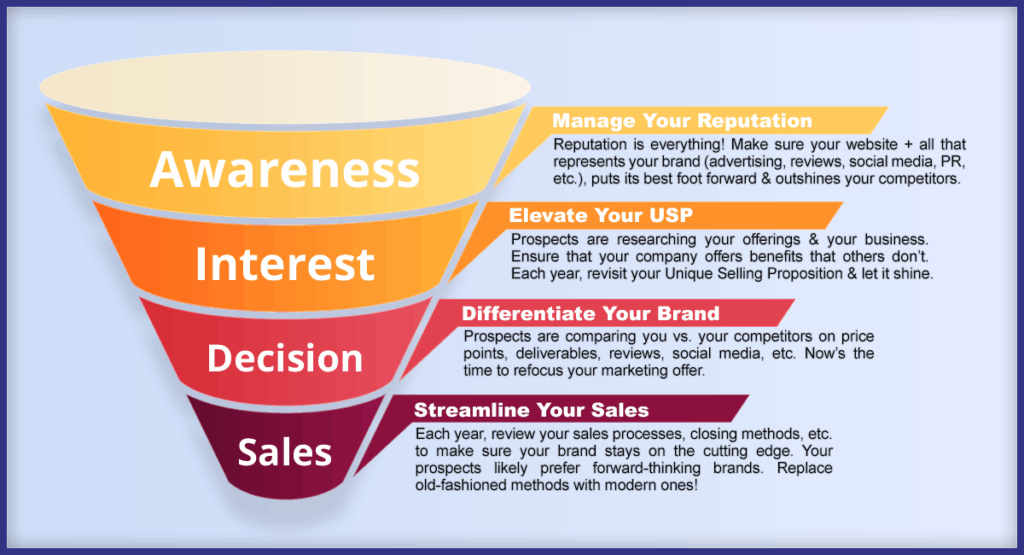
In practice, the organisational structure depends on the size of the company. Large companies have separate teams for marketing and for PR (or communications in general), each specialising in its own area. I regularly come across roles such as marketing manager, PR manager or communications manager, all of whom work together to make sure customers and partners know the company and see it positively. A major weakness, however, is that in many companies PR is not integrated into marketing and neither the goals nor the techniques are aligned.
By contrast, in small and medium-sized companies PR is often integrated into marketing : the PR agenda is overseen, for example, by a marketing manager who is also responsible for public communication. This approach saves resources, but it also requires the company to recognise that PR and marketing are not the same thing and that both roles need to be filled.
A good link between marketing and PR creates synergy. Marketing campaigns can gain more credibility when backed by PR activities, for example when a new product launch is accompanied by positive media coverage or influencer recommendations secured by the PR department. When a brand reaches the public in many forms and several times, it achieves greater penetration and a higher chance of campaign success.
PR can benefit from marketing data (e.g. market research) to target its message better. In today’s era of integrated marketing, many PR teams therefore work closely with their marketing colleagues and share information. Some PR agencies now even offer services that used to belong exclusively to marketing (such as buying advertising space or creating creative campaigns), blurring the line between earned and paid media. The key, however, is that brand positioning and brand communication remain consistent, whether they come through advertising, social media or a press release.
Measuring success also differs in marketing and PR. Marketing is often assessed by sales figures, revenue growth, the number of leads generated and so on. Here are the most common marketing KPIs. With PR, measuring impact is more complex, because it is reflected in brand associations, reputation and relationships, which are harder to quantify. There are, however, metrics such as AVE (Advertising Value Equivalent), which calculates, for example, how much equivalent paid advertising would cost in the media outlet that wrote about us thanks to PR.
For example, when a newspaper prints a half-page article about our company, AVE tells us how much we would have paid for an advert of the same size. Even so, the real value of PR shows mainly over the long term, in the trust built, a better reputation and customer loyalty, which cannot always be turned into numbers in a spreadsheet straight away. PR also uses more common metrics, such as mentions or the reach of published press releases.
What tools and methods does PR use?
In PR, there are definitely no limits. From my own experience, I know that successful PR campaigns combine several communication channels and adapt to the target audience. The main PR methods and tools include, for example, the following:
- Relations with the media (media relations): Maintaining and developing good relationships with journalists and the media. This includes sending out press releases, actively pitching stories or topics to journalists and organising press conferences. The aim is for positive and relevant news about the company to be published. A PR specialist often also acts as the company’s spokesperson, answering media enquiries and issuing statements. When it works, the media write about our brand of their own accord based on the materials provided, and this carries more weight than paid advertising. Mass distribution of press releases often does not work at all well.
- Tying into relevant topics through the media: If you watch news reports on TV Nova, Prima or even smaller media outlets, you will certainly have noticed that various topics are commented on by experts who often work for a company. This format works very well: the company not only gets airtime in a way the viewer cannot detect, but also becomes linked with the topic. When cyber fraud is being discussed and an expert from Komerční banka speaks in the report and explains how the bank fights it, that company gains an edge over the others.
- Content creation: PR professionals are often involved in creating content that spreads the brand’s brand positioning and communication themes. They write press releases, prepare speeches and presentations for company management, create articles for the company blog or newsletters and manage website content. Nowadays this also includes creating social media posts. High-quality content allows an organisation to tell its story in its own voice and build a reputation as an authority in its field. For example, a CEO publishing an expert article in a specialist outlet can strengthen the company’s image as a leader in its industry. Personally, for example, I also write articles as part of link building that could be classed as PR activities. My goal is not just to get a link with some keyword. Today, far more than in the past, what matters to me is what we communicate in the article, what information we bring and what associations we create with the brand. I would underline that last point. It works for search engines, AI models and, above all, for our brains. And that is what marketing is about.
- Interviews and appearances: A very common vehicle for brands is still a person who speaks on behalf of the company and communicates the things that matter to it. The job of PR is to give this person the widest possible audience and keep to the agreed line of communication.
- Social media and influencers: Social media have become an integral part of PR communication. Through them, a company builds a community of fans and customers, responds to their feedback and actively shapes how people talk about it online. As a PR specialist, I often help define the tone of communication on social media (the so-called brand voice) and set out how to respond to comments and feedback so that the brand comes across consistently. Another important area is working with influencers, that is, influential personalities on social media who can recommend the brand to their followers. A carefully chosen influencer who is a genuine fan of the product can give the brand authenticity and reach a new audience. However, if the collaboration is not believable (the influencer promotes something they do not believe in themselves), it can damage the brand’s image instead. That is why PR has to select and manage such collaborations carefully so that they feel natural and add value. This is where traditional PR connects with social media specialists or even influencer managers.
- Events and sponsorship: Organising various events is a traditional part of public relations. These may be press conferences where the company announces important news to the media, as well as expert seminars, round tables, open days, product launches or charity events for the public. A well-organised event allows face-to-face contact with members of the public or the media and leaves a direct experience associated with the brand. PR activities also often include sponsoring social, cultural or sports events. In this way the company supports a good cause or a community while raising its profile in a positive way. For example, when a brewery sponsors a local music festival, it strengthens brand awareness and builds an image as a supporter of community life.
- Internal communication: Although it may not seem so at first glance, communication within the company also falls within the broad field of PR. Satisfied employees are important brand ambassadors: when they speak positively about their company, they give it good PR externally. That is why many organisations focus on open internal communication: regular meetings between management and staff, internal newsletters, an intranet, company events for employees and so on. All of this helps align everyone in the company with shared values and goals. Internal PR also handles sensitive matters, such as internal changes, to prevent rumours from spreading and staff from becoming frustrated. In the Czech Republic there is a saying: “As the employees go, so goes the public”. If a company cannot manage communication with its own people, it will soon show externally too.
- Crisis communication and reputation management: An integral part of PR is preparing for crisis situations and handling them. Any company may face a problem from time to time, whether it is dissatisfied customers complaining on social media, a negative article in the media, a product defect or a larger scandal. The PR team’s job is to have a crisis communication plan ready in advance (what to say, who will say it and through which channel) and, if a crisis strikes, to respond quickly, transparently and appropriately. An open apology and explanation can often prevent the worst, as the public usually appreciates an effort to resolve the situation. If crisis communication succeeds in restoring trust, the company can even strengthen its reputation by showing that it can face up to a problem. Conversely, poorly handled crisis communication (obfuscation, denial, slow responses) can damage a company’s good name for years. Beyond dealing with acute crises, reputation management also involves ongoing monitoring of the media and social networks so that the company knows what is being said about it and where, and can step in early if inaccurate or damaging information appears.
The tools above usually work best in combination. For example, for a new product launch, as a PR manager I can use all of them: I prepare a press release and send it to the media (media relations), publish key information and interesting facts on the company blog and social media (content and social media), organise a small event for journalists and influencers where they can see or try the product (event marketing), and inform employees internally so that they also know what to tell customers (internal communication). If any controversy were to arise (for example, criticism of the product), I have responses and experts for interviews ready (crisis communication). A PR campaign coordinated in this way ensures that the new product is talked about consistently and positively across all channels.
Why is PR important and what does it bring?
Well-managed PR pays off in the long term. Naturally, it is mainly large corporations that have a dedicated department, but smaller companies should also clearly define their PR activities and someone should be responsible for them. If a company relied solely on immediate sales driven by advertising and neglected building relationships with the public, it could run into trouble. Customers today pay close attention to brands’ reputations, their values and how they communicate externally. PR should, perhaps even more than other marketing departments, take care of the right brand positioning, associations, and both the content and form of the brand’s communication.
This is exactly where PR comes in, building so-called brand equity (the value of a brand in the eyes of the public beyond the evident value of its products or services). Companies with a good reputation have more loyal customers, find it easier to attract new talent (people want to work for a company with a good standing) and are better able to weather difficult times.
PR is also key to the trust of investors and business partners. For publicly traded companies, a positive public image directly affects shareholder confidence and therefore the share price. When a company regularly communicates its successes as well as its challenges and builds a credible story, investors have greater confidence in its management and strategy. Conversely, negative publicity (for example, a product quality scandal or an ethical misstep) can significantly knock down the company’s stock market value, not only because of the problem itself but also because of the damage to trust. That is why companies also invest in PR in the area of relations with investors (so-called investor relations), where the task is to communicate financial results, strategies and news so that the company is perceived as transparent and trustworthy.
Besides companies, public institutions, non-profit organisations and individuals also use PR. Politicians and authorities need to communicate with citizens, build support for their initiatives and explain their decisions, and that is also a job for PR (here we often speak of public affairs or public administration communication). Non-profit organisations, in turn, use PR to raise awareness of their work and to attract donors or volunteers. And well-known personalities (actors, athletes, influencers) use PR to build their personal brand: they give interviews, manage their image on social media and respond to controversies. Anyone who is visible in public can benefit from good PR, because it helps them maintain a positive relationship with their audience.
Real-world examples show how powerful the impact of PR can be. A classic “textbook” example is the crisis communication of Johnson & Johnson in 1982 during the so-called Tylenol case: after an unknown perpetrator poisoned several packs with cyanide, the company withdrew all Tylenol medicines from the market and openly informed the public about every step it took. Even though it was financially costly, the company put public safety before profit. This move and its transparent communication subsequently restored consumer trust, and it is often cited as an example of excellently handled crisis PR. More recently, we witnessed, for example, the viral ALS Ice Bucket Challenge campaign (2014), a challenge in which people poured ice-cold water over themselves to draw attention to ALS. Thanks to PR and sharing on social media, the campaign spread around the world, and within a short time millions of people, including celebrities, took part. The result was not only a significant increase in awareness of ALS but also tens of millions of dollars for research. The non-profit organisation achieved all of this with practically no paid advertising, simply through clever use of PR and the power of personal recommendations. These examples show that good PR can work wonders: it can turn a crisis into an opportunity or transform a seemingly small event into a global phenomenon.
PR in a nutshell
Public relations is a fascinating field at the crossroads of communication, marketing and psychology, and as such it is irreplaceable in every modern company or institution. As someone who works in PR, I can say that good PR can literally be a game changer for a company: it can turn a brand into the audience’s darling, put out a potential fire before it starts, or bring to the forefront stories that deserve attention. It is important to remember that PR results are not always visible immediately, because it is a long-distance run. Patiently building reputation and relationships pays off, though: customers who trust a brand come back and forgive its occasional mistakes; employees who are proud of their employer work with more motivation; and a public that knows a company in a good light will more readily show its support when it is needed.
PR is closely related to marketing, but let us not forget that it is not merely a “subordinate” discipline of it. It is a strategic function in its own right which, together with marketing, forms a pair ensuring that a company is talked about in the right way, to the right people and at the right time. You can recognise effective PR by the fact that people speak positively about your brand without you paying for it directly, creating a kind of spontaneous wave of good reputation. And that is something you cannot buy; you have to earn it.
Ultimately, the best marketing and PR go hand in hand. As I have experienced several times, when a great product, a smart marketing campaign and honestly done PR work (relationships with journalists, communities, stories that touch people’s hearts) come together, amazing things happen. The brand then not only grows commercially but also gains a good name that will accompany and protect it. And that is exactly what public relations is about: building bridges between an organisation and the public, across which mutual understanding and trust can flow. Whether you are a business owner, a marketer or a PR enthusiast, investing in good PR is an investment in long-term success. Personally, I see PR as an integral part of a successful business, and I recommend that anyone who wants to build lasting value for their brand does not forget about relations with the public.

