
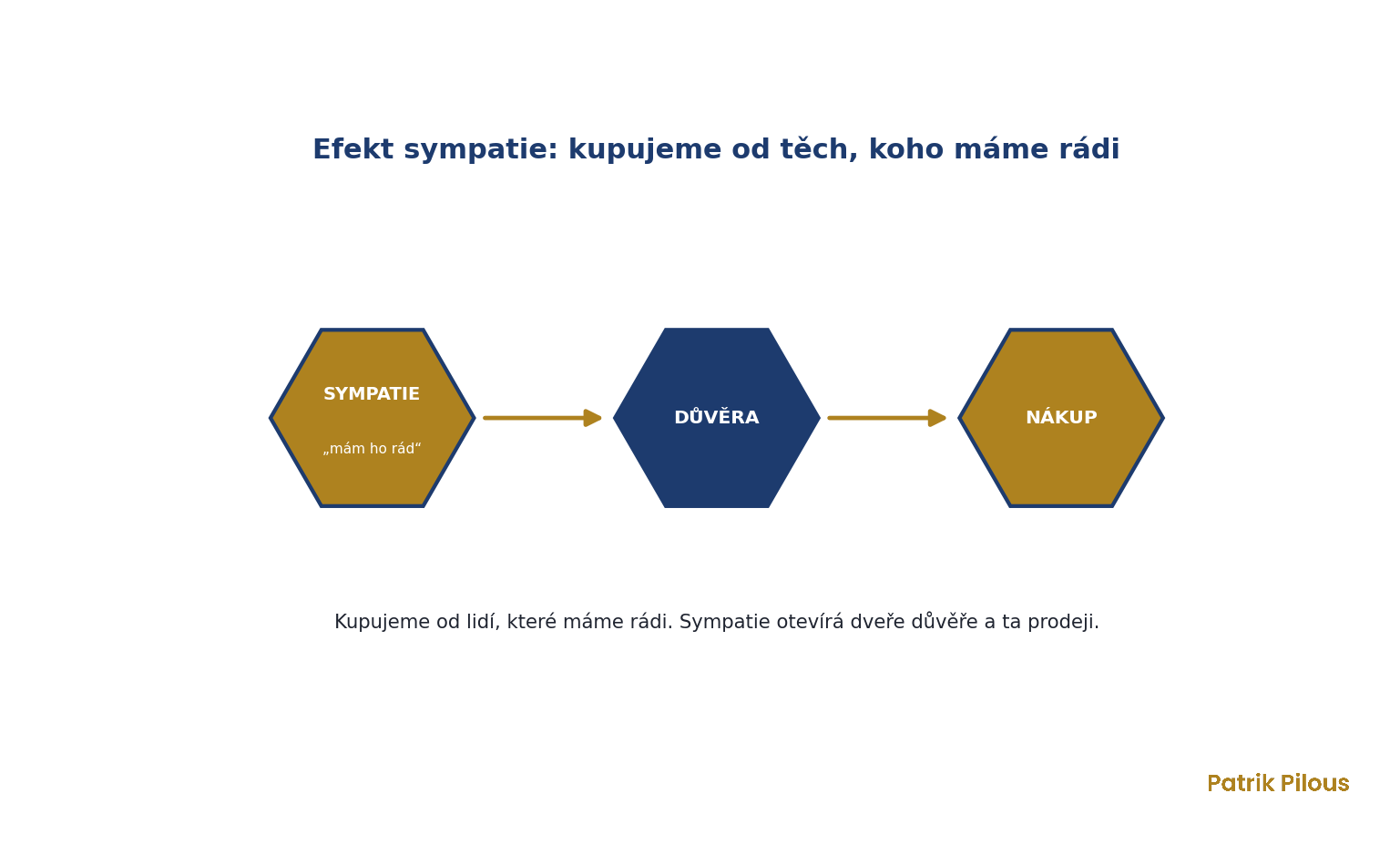
The liking effect is a psychological principle whereby we find it much easier to say yes to people we like. When we like someone, we automatically trust them more, we are more accommodating towards them and we are more likely to buy something from them or accept their opinion. We do not need any rational reason for this. Liking works as a shortcut that bypasses critical thinking and opens the door straight to trust.
And because both sales and marketing rest on trust, the liking effect is one of the most effective tools of persuasion there is. In general, studies and tests also show that good-looking people simply have an easier time in life. A captivating voice, eyes or way of speaking are forms that significantly influence the success of an individual (and of a group).
The human brain has a fascinating, if somewhat superficial, tendency to use physical attractiveness as a heuristic shortcut for judging a person’s overall quality. One statistic says it all: people of above-average attractiveness earn 10 to 15% more than people of below-average looks (with the same abilities).
Classification of the cognitive bias
- Cause (Cognitive Bias Codex): Not enough meaning
- Mental domain: Social
- Marketing function: Social influence
- Customer journey: Consideration
- Cialdini’s principles: Liking
- System 1 / System 2: System 1 (fast, automatic)
In a nutshell
- What it is: we buy more readily from people we like and trust them more.
- What creates liking: similarity, looks, compliments, a shared goal and familiarity.
- Where you will meet it: influencers, salespeople, recommendations from friends, personal brands.
- How to use it: give your brand a human face and look for genuine similarity with your audience.
A real-life story
The American psychologist Robert Cialdini included the liking effect among his six principles of persuasion in his famous 1984 book Influence: The Psychology of Persuasion. As a textbook example, he cites the Tupperware sales model, that is, parties held at home. The products are not sold by an unknown salesperson but by your friend, whose home you are visiting. You are not really buying containers, you are buying from someone you like and do not want to disappoint. The hostess’s likeability sells more than the best advertisement ever could.
Research shows where liking comes from. We prefer people who are similar to us, whether in opinions, clothing or interests. Sincere compliments work, even when we suspect they are a little calculated. And a shared goal or a common enemy brings us closer together. That is why salespeople look for what they have in common with the customer, and why good negotiators build a relationship first and only then deal with the matter at hand.
Imagine Honza, who is considering a new camera. He comes across a review by a YouTuber he has been following for years, he laughs at his jokes and sees him as a friend. When the YouTuber recommends the camera, Honza trusts him more than expert tests. He does not know him personally, but after months of watching he sees him as a likeable acquaintance. This is the liking effect combined with the mere exposure effect.
Did you know: liking and physical attractiveness are closely linked. We automatically attribute other good qualities, such as honesty or intelligence, to attractive people. This spillover of one impression onto our overall judgement is called the halo effect, and it is one of the reasons why adverts so often rely on likeable and good-looking faces. On the other hand, some very attractive women carry the stigma of being a “gold digger”, and people superficially expect them to be calculating and not very capable.
How the liking effect works
For the brain, liking is a signal of safety. Historically, someone who was similar to us and pleasant meant less of a threat and a possible ally. That is why we lower our guard and trust them more easily. In decision-making, liking then acts as a substitute for laborious checking. Instead of examining the facts, we follow the feeling that “this person is all right”. The effect is linked to reciprocity, because we are more generous towards people we like, to the authority effect and to social proof. Together they form the pillars of persuasion.
Use in marketing
- A human face for the brand. A founder, a team or a specific person comes across as more likeable than an anonymous logo. People connect more easily with people than with a company.
- Influencers and ambassadors. A recommendation from someone the audience likes combines liking, trust and social proof in one.
- Similarity with your audience. Speak your customers’ language, share their values and show that you are one of them. Similarity is the strongest trigger of liking.
- Sincere appreciation. Thanking and recognising customers builds a relationship. But people can sense false flattery, so it has to be genuine.
- A shared story or goal. A brand that stands for something the customer believes in becomes an ally, not a supplier. PR and strong branding also help here.
- Aesthetics and first impressions. An appealing look for your website, packaging and the people in your photos works through the halo effect and increases trust before a single word is spoken.
How to resist the liking effect
- Separate the person from the offer. Ask yourself “would I want this even from someone I do not like?”. That way you separate the product from the feeling.
- Beware of calculated compliments. When flattery is immediately followed by an offer, it is most likely a technique, not a coincidence.
- Decide based on facts. A likeable salesperson does not necessarily mean a good product. Check the thing itself.
The liking effect is a reminder that business is ultimately about people. As a brand, you will gain more by being genuine and close to your customers than by any clever tactic. And as a customer, it is worth knowing that what we like is not necessarily what is best.
Frequently asked questions
What is the liking effect?
A psychological principle whereby we more readily say yes to, and place more trust in, people we like. Liking works as a shortcut to trust.
What creates liking?
Mainly similarity, physical attractiveness, sincere compliments, a shared goal and familiarity through repeated contact.
How can the liking effect be used in marketing?
Give the brand a human face, work with popular personalities, look for genuine similarity with your audience and build on shared values.

