
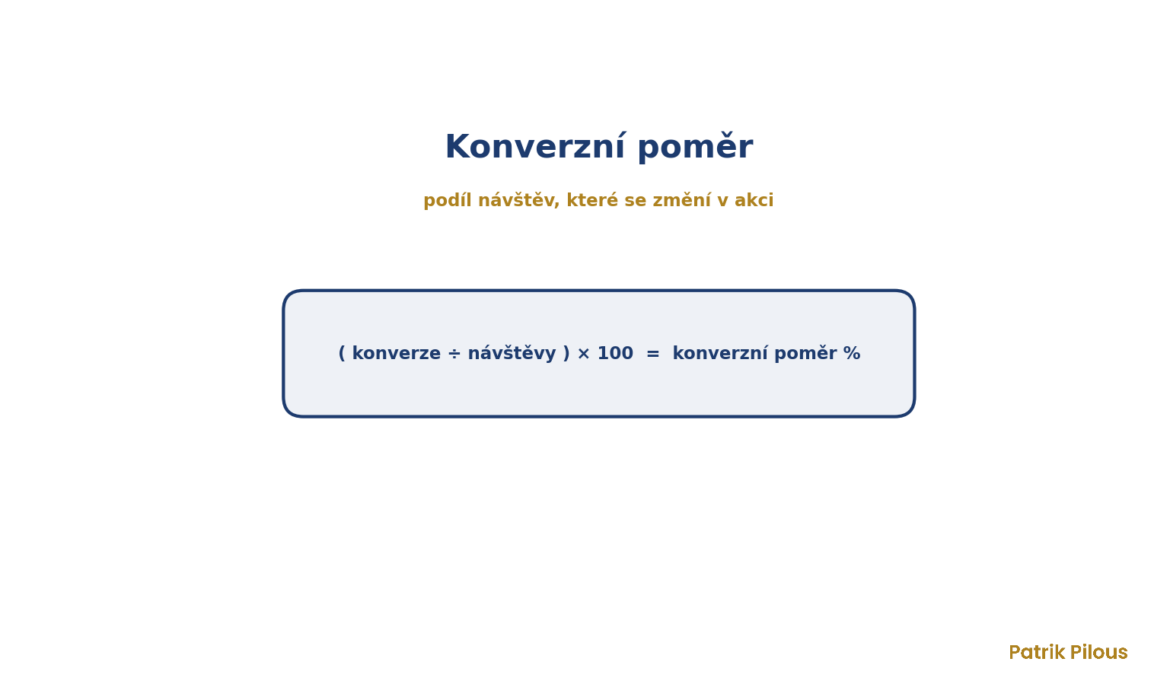
Conversion rate is the share of visitors who do what you want them to do on a website. That action, the conversion, can be an order, a submitted enquiry, a sign-up or a file download. It is simple to calculate. Divide the number of conversions by the number of visits and multiply by a hundred, and the result is a percentage. It is one of the most important numbers in online marketing because it links traffic to real results. Even the biggest flow of visitors from SEO is worthless if none of them becomes a customer. Conversion rate is exactly the point where traffic turns into money.
Where the word comes from
The word conversion comes from the Latin conversio, meaning a turn, a transformation, a turning around. It originally had a religious meaning too, conversion to a faith. In marketing it became the term for the moment when a mere visitor becomes someone who takes the desired step. A rate is then a simple ratio, the relationship between two numbers. So conversion rate literally expresses what share of people turn around and change from passers-by into customers on their path to purchase.
A short history of conversion rate
With the rise of e-commerce, conversion rate became one of the main metrics of success. Companies realised that winning a visitor is expensive and started asking how to get more out of traffic they had already paid for.
This gave rise to a whole discipline called CRO, conversion rate optimisation, which systematically tries to increase the share of people who complete an action. It overlaps closely with work on user experience, because a website that is easy to use also sells better.
How conversion rate works from an SEO perspective
SEO brings people in, and conversion rate decides what happens to them next. The key is bringing in the right people, which means matching search intent. A visitor with purchase intent converts far better than someone who was only looking for information. That is why I always track conversions in the context of the keywords that brought visitors to the website.
The page where people land plays a crucial role. A well-made landing page with a clear offer and one main call to action converts many times better than a generic page. Speed matters too, because a slow website, measured through Core Web Vitals, drives people away before they get a chance to buy.
Why conversion rate matters
Conversion rate is the lever that multiplies the value of all your work. Doubling it means doubling your results without spending a single extra crown on advertising or SEO. That is exactly why investment in conversion often pays off faster than chasing more traffic.
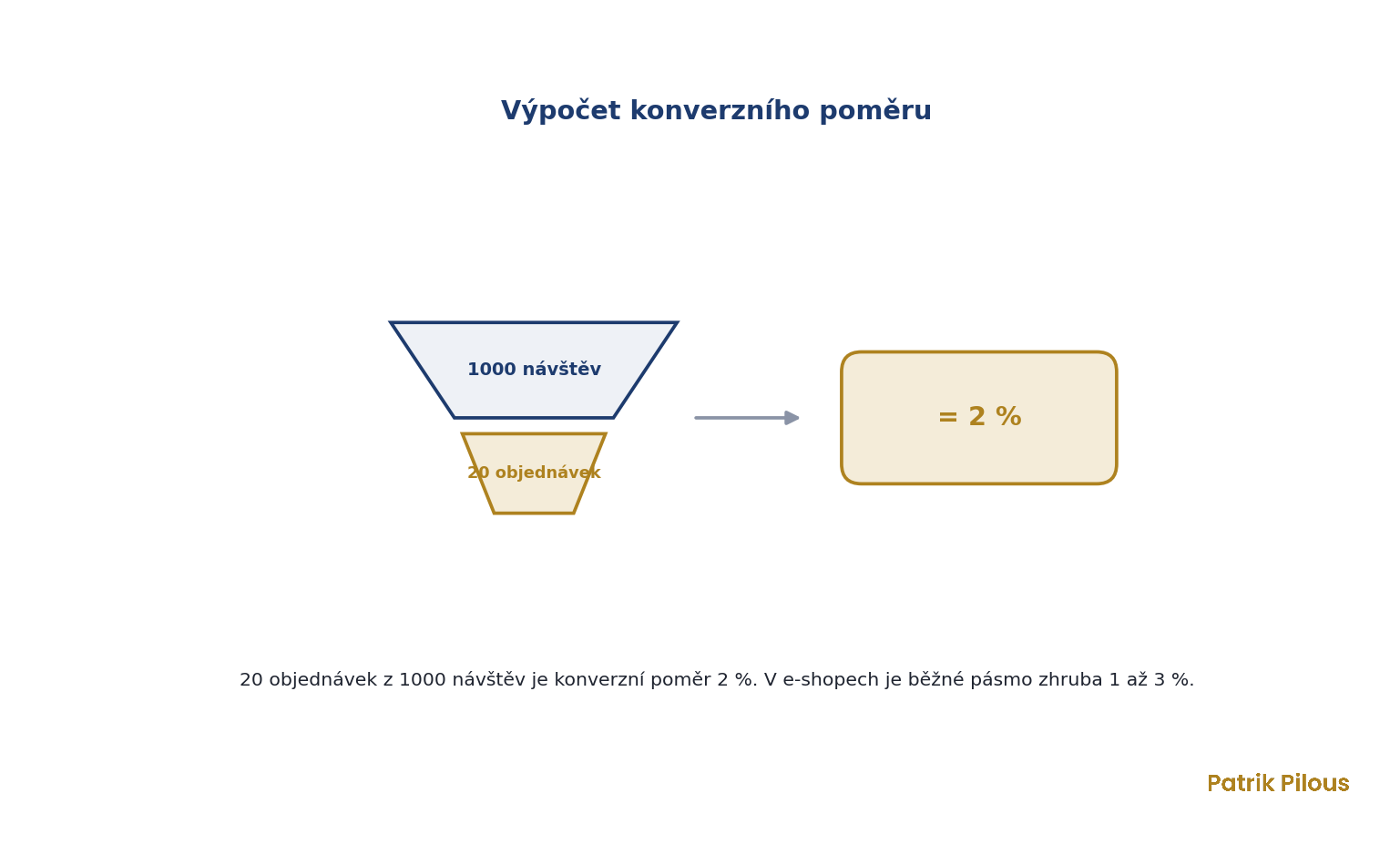
It is also an excellent measure of quality. A low conversion rate with high traffic is a clear sign that something along the path to action is causing friction, whether it is the offer, trust or usability. That is why I take it into account in every audit and when thinking about SEO return on investment. In online shops, a typical conversion rate is roughly between one and three per cent.
Where it leads further
Behind conversion rate lies the whole psychology of decision-making. People do not act rationally but under the influence of emotions and biases. They are put off by the pain of paying at the moment they have to reach for their wallet, and they are paralysed by the paradox of choice when you serve them too many options. Increasing conversion rate often means not adding but taking away. Removing friction, doubts and unnecessary steps. It is a discipline on the border between marketing and psychology, where a small change in the right place can make a big difference.
Most common mistakes
- Chasing traffic while ignoring conversion rate, so more people arrive and still nobody buys.
- Sending people to a generic page instead of a targeted landing page.
- Overlooking speed and usability, which are decided by user experience and Core Web Vitals.
- Too many calls to action on one page, so people end up choosing none.
Questions about conversion rate
What is conversion rate?
The share of visitors who take a desired action, such as a purchase or an enquiry. It is calculated as the number of conversions divided by the number of visits, multiplied by a hundred, and the result is a percentage.
What is a good conversion rate?
It depends on the industry, but for online shops the usual range is roughly one to three per cent. More important than the absolute number is how it develops over time on your own website.
How do you increase conversion rate?
Bring in the right people by matching intent, send them to a targeted landing page, speed up the website and remove unnecessary friction and distractions from the path to action.

