
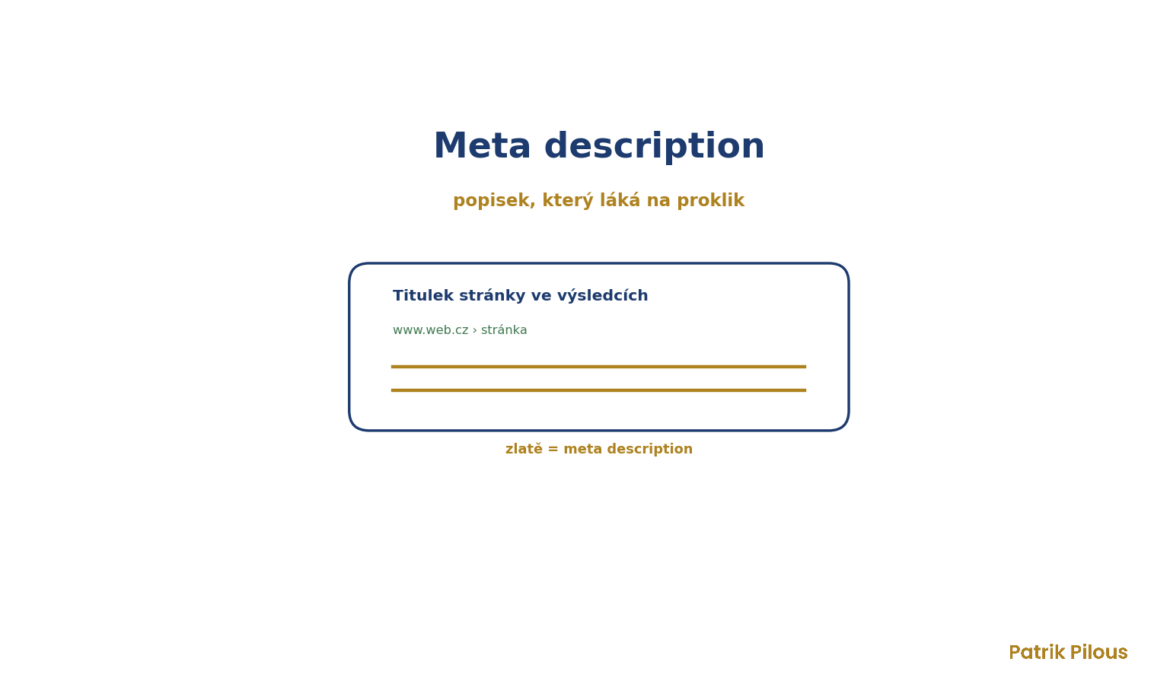
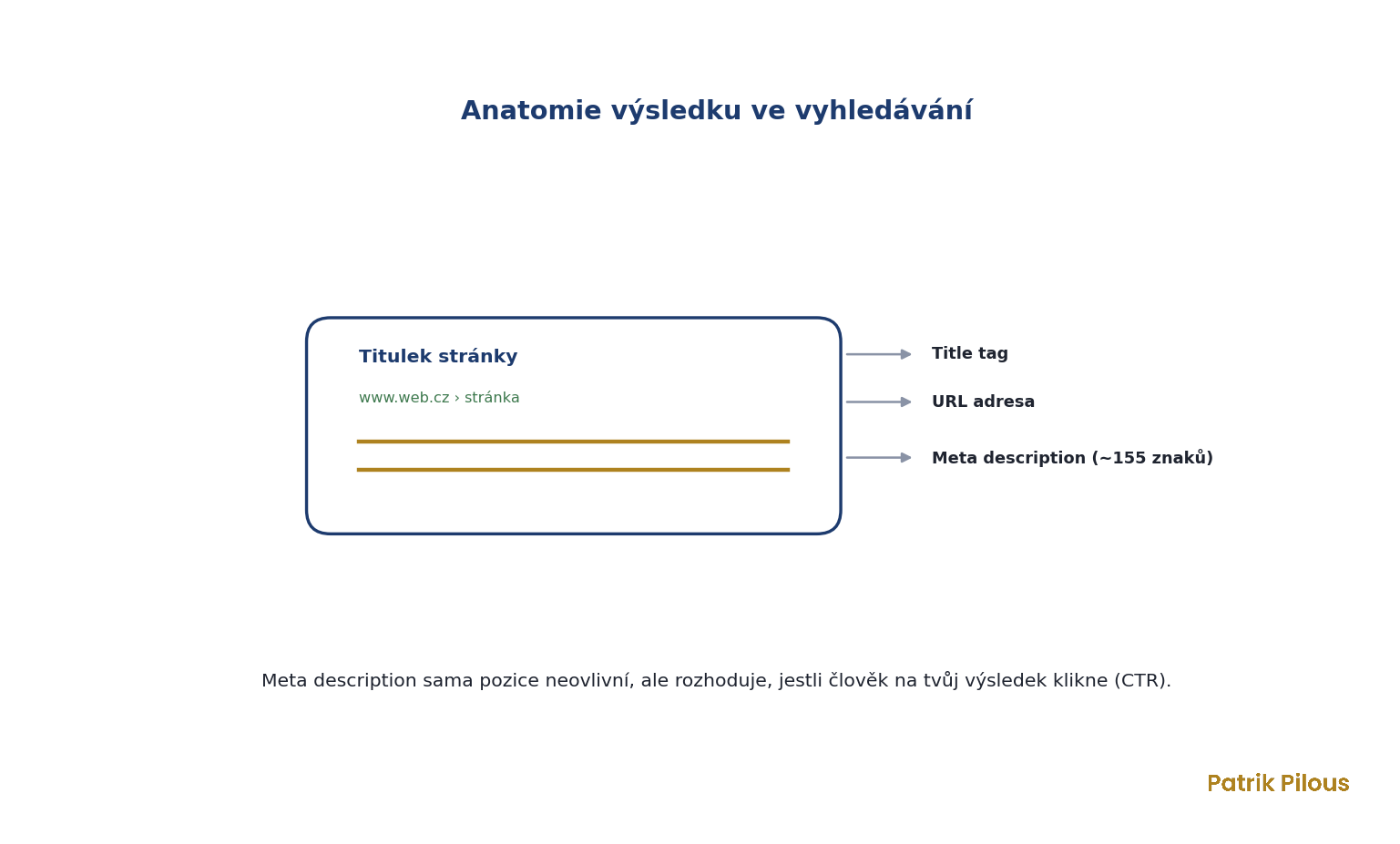
A meta description is a short summary of a page that appears below its title and URL in the search results. It is essentially a small invitation and an extension of the meta title. Its job (and its effect) is not to influence rankings but to persuade the person who sees the result to click on your link in particular. In the past, the meta description was a much more important part of page optimisation.
That is why a well-written meta description works like advertising copy in miniature. In a few dozen characters, it has to capture what the page is about and give a reason to visit it. The difference between a dull description and a catchy one shows up partly in the click-through rate. Today, meta descriptions can also be used for other purposes, as they can carry more information and be used more creatively.
Where the word comes from
The name has two parts. The prefix meta comes from Greek and means after or about. In computing, it is used for data about data, that is, metadata. Description simply means a description. A meta description is therefore descriptive information about a page that is not visible on the page itself but is written in its code and serves mainly search engines and what they show to users.
A short history of meta descriptions
Meta tags, including the description, appeared in HTML as early as the mid-1990s. In the early days of the web, the meta description was even one of the factors search engines used to rank results. However, this led to widespread abuse, with websites stuffing keywords into the description without rhyme or reason. Search engines therefore gradually stopped trusting this signal, and around 2009 Google officially confirmed that the meta description no longer affects rankings. Even so, I still meet marketers and clients who believe in the sacred power of the meta description.
Since then, it has had a single but important role. It decides whether a person clicks on the result. Google also often rewrites the description itself based on the query, but a well-written version still gives you the best chance.
How the meta description works from an SEO perspective
The meta description is written in the head of the page, and the search engine uses it as the description in the results. The ideal length is roughly 150 to 160 characters so that the text is not cut off. The key point is that it is not a ranking factor but a click factor, in other words it affects the click-through rate (CTR). Even a page in a lower position can attract more visitors than a dull result above it, thanks to an enticing description. A good meta description contains the search term, because Google shows it in bold in the result, states clearly what the visitor will get and adds a call to action. It is a discipline on the border between SEO and copywriting.
Why the meta description matters
The meta description is one of the few places where you can directly and easily influence how many people click through to you. It is cheap, quick work with a big impact. Improving the descriptions on your most visited pages can increase traffic without moving your search rankings at all. It is also your first, and sometimes only, chance to speak to a person before they even enter your website. That is why it pays to give descriptions proper care rather than letting them be generated automatically.
Where it goes further
The meta description is a textbook example of how success often depends not on the quality of the product itself but on how you present it. A page can be as good as it gets, but if the description does not sell it, people will never visit it. This is where SEO meets psychology. In descriptions, you can cleverly use the fact that we are drawn more strongly to negative and cautionary wording, as described by the negativity bias. A title such as The most common SEO mistakes usually attracts more clicks than Tips for better SEO, even though they promise almost the same thing. In short, the meta description is a shop window, and it decides who comes in.
The most common mistakes
- No meta description at all, so Google pulls out a random and often unappealing snippet of text.
- A description that is too long and gets cut off mid-sentence in the results.
- The same meta description on dozens of pages instead of a tailored one.
- A description with no reason to click, just a dry list of the content.
Questions about the meta description
What is a meta description?
A short description of a page in its code that appears below the title in the search results and is meant to persuade users to click.
Does the meta description affect search rankings?
No. Google has not used it as a ranking factor since around 2009. It does, however, affect the click-through rate, meaning how many people click on the result.
How long should a meta description be?
Ideally around 150 to 160 characters, so that it is not cut off mid-sentence in the results.

