
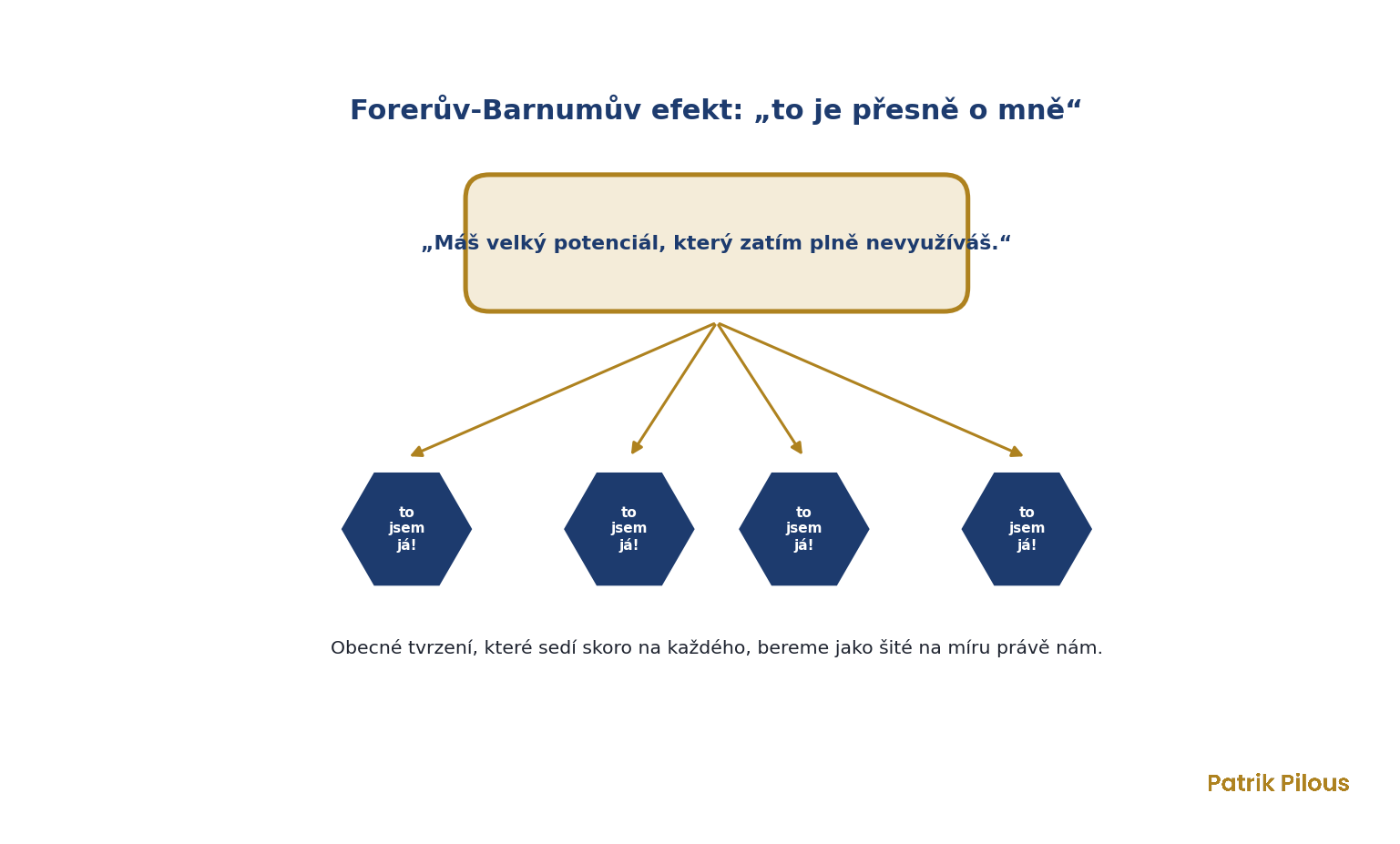
The Forer-Barnum effect (known in English as the Barnum effect) is a cognitive bias in which we take general, vague statements that apply to almost anyone as an accurate and personal description of our own personality. You read a horoscope, the result of a personality test or a palm reading and feel “this is exactly me”. Yet the same text fits millions of other people too. Tarot readers and skilled manipulators both use it.
Our brain fills a vague statement with specific content from our own life, which is already playing out in our head as we read it. Then it marvels at how accurate it was. In reality, we supply the accuracy ourselves.
Classification of the cognitive bias
- Cause (Cognitive Bias Codex): Not enough meaning
- Mental area: Social and self-assessment
- Marketing function: Personalisation
- Buyer journey: Consideration
- Cialdini’s principles: not applicable
- System 1 / System 2: System 1 (fast, automatic)
In brief
- What it is: we take a general statement as tailored specifically to us.
- Where you meet it: horoscopes, personality tests, quizzes, fortune telling, vague reviews.
- How to use it: personalise for real, or at least so that customers think “that’s me”.
A real-life story
In 1948, psychologist Bertram Forer played a small trick on his students that became a classic. He gave them a personality test and a week later handed each of them their “individual” assessment, asking them to rate how accurately it described them. The students were delighted, and the average accuracy rating was 4.3 out of 5. There was just one catch. They had all received exactly the same text, which Forer had put together from random sentences taken from horoscopes. Sentences such as “at times you doubt whether you made the right decision” or “you have a great deal of unused potential” simply fit everyone.
The name of the effect also refers to the famous circus showman P. T. Barnum, who is credited with the motto that a good show has something for everyone. The whole business of horoscopes, fortune telling and palm reading works on exactly this principle. The fortune teller tells you fairly general things, you add your own story to them and leave feeling they read your mind.
Hand on heart, you know this yourself. You read the result of a quiz like “what personality type are you” and nod along at how precisely it captures who you are. Yet if you had been given the description of the neighbouring type, it would probably fit you almost as well.
Fun fact: the trickiest part is that even clever and sceptical people fall for the effect. It does not depend on intelligence, but on how vague the statement is and how much it concerns us personally. The more personal the topic, the more willingly we supply the accuracy ourselves.
How the Forer-Barnum effect works
The brain cannot stand an empty space, so it automatically fills a vague statement with specific content from its own head. It also helps that we focus on what fits and overlook what does not, which is close to confirmation bias. The halo effect plays a role too, because once one sentence fits, we believe the rest. And if the text is read out by an authority or arrives at the right moment thanks to priming, the effect grows stronger.
Use in marketing
- Quizzes and tests. “Find out what type of customer you are” or “which product suits you” work brilliantly, because everyone reads the result as being about them. They are also easy to share.
- Personalised communication. Even a slightly personal approach (“I know this is exactly what you’re dealing with”) creates the feeling that you are speaking directly to that person.
- Target group and persona descriptions. A well-written persona works when customers recognise themselves in it. But be careful not to slip into a description that fits absolutely everyone. That is a trap familiar to anyone who creates a marketing strategy.
- Reviews and testimonials. A specific “that’s just like me” story persuades more than general praise. The more detail, the stronger the identification.
- Content segmentation. When readers feel the content is meant for their situation, they trust it more. Building brand associations is closely related.
- The ethical line. Real data-driven personalisation is best. A vague “tailored” message with no substance works in the short term, but once the pretence is spotted, trust collapses.
How to protect yourself from the Forer-Barnum effect
- Ask who else it fits. If the same description also applied to your neighbour, it is not about you but about how general the statement is.
- Look for specific statements. A real analysis will also tell you something uncomfortable and specific. Vague flattery is suspicious.
- Be careful with paid “analyses”. When someone offers you a personality description or a reading for money, expect much of it to fit everyone.
The Forer-Barnum effect is a reminder that the feeling “this is exactly me” does not mean it really is about us. In marketing, use it so that people recognise themselves in your message, but do not mistake clever vague phrases for real value.
Frequently asked questions
What is the Forer-Barnum effect?
A cognitive bias in which we take general statements that apply to almost anyone as an accurate and personal description of our own personality.
Who discovered the Forer-Barnum effect?
Psychologist Bertram Forer in 1948, when he gave his students an identical “personal” description put together from horoscopes and they rated it as highly accurate.
How can the Forer-Barnum effect be used in marketing?
Through quizzes, personality tests and personalised communication in which customers recognise themselves. Real data-driven personalisation is ideal.

